John Newton’s Letters to Sarah Gardiner
‘'Mrs Gardiner of Sleaford… is a lady of the first rank in the line of my acquaintance,
for good sense, solid judgment, and true piety.’
John Newton to William Wilberforce, 1792
Sarah longed for somewhere she could find Gospel preaching and Christian fellowship to counteract her doubts and fears. Having been helped by Newton’s writings she reached out to him for advice.[1] His reply in the first letter of this collection, directing her to rely on the One who is able to save to the uttermost, communicates a level of reassurance and empathy which continued throughout their deepening friendship.[2]
No known portrait exists of Newton’s Lincolnshire correspondent Sarah Gardiner but this sketch of ‘Miss Gardiner’ by Newton’s friend John Bacon RA is probably her daughter:
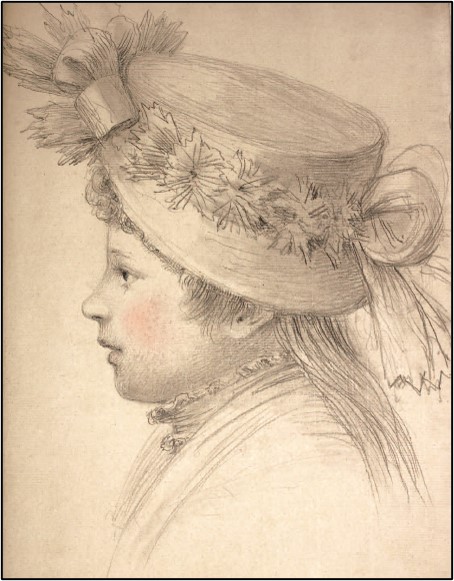 Sarah Myra Gardiner
(1777-1801)
who married Newton’s nephew Benjamin Nind (1773-1867) in 1796.
On 10 June 1776 Newton received a letter from Sarah Gardiner written on the 6th from Yardley, where her brother-in-law James Gardiner (1738-1799), brother of her husband William (b.1735), and a near neighbour of Newton’s, was the Rector. Newton’s reply on the 20th marks the beginning of his series of letters to her.
|
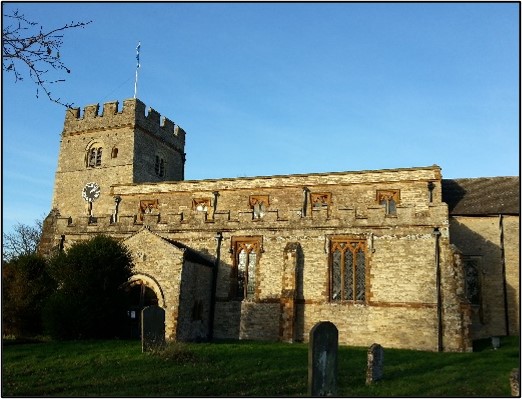
James Gardiner was the Rector of Yardley Hastings,
a few miles NW of Olney. |
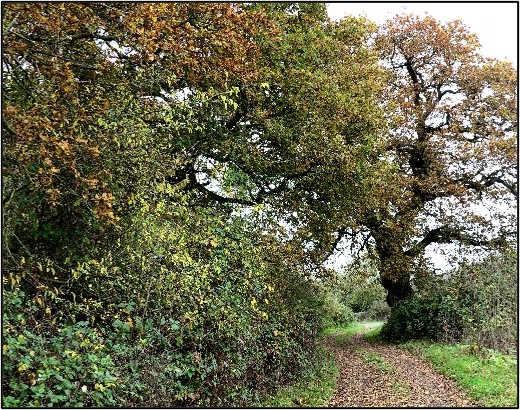 Newton
 would often walk from Olney to Yardley
to visit the believers.
|
|
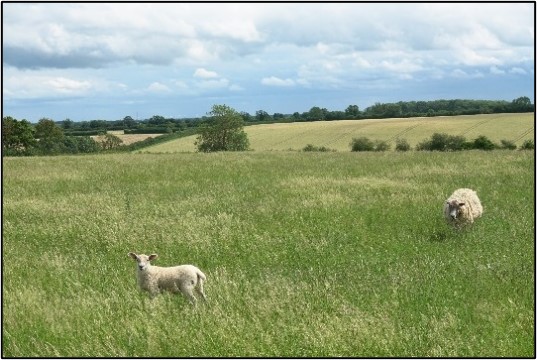
Sarah and William Gardiner lived at Westfield Farm, Leasingham, for several years: |
the track
to
Westfield Farm |
 |
 |
 |
 |
 |
|
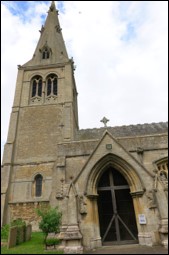
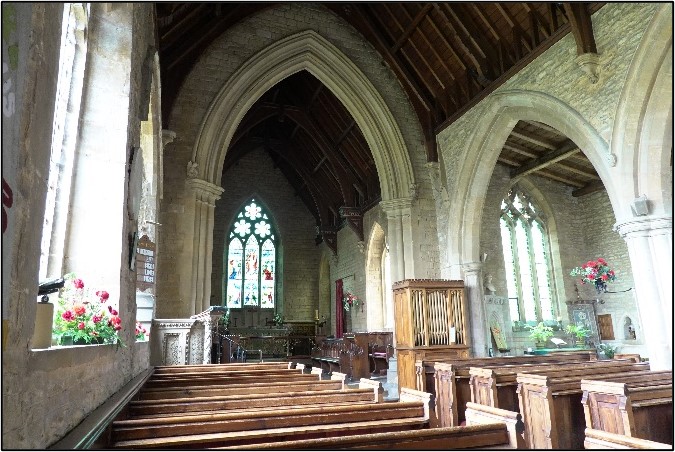
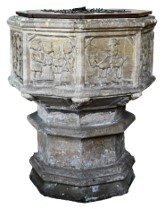
Some of their children were baptised in the local Anglican church, St Andrew’s. |
|
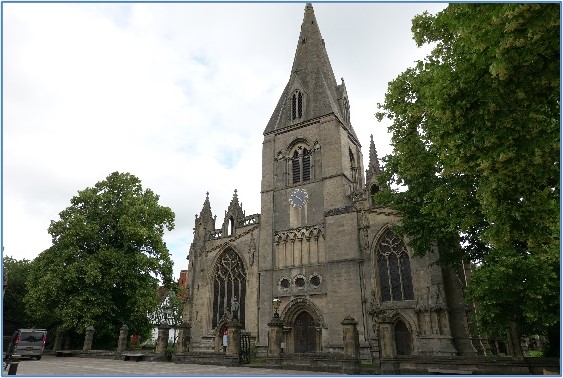
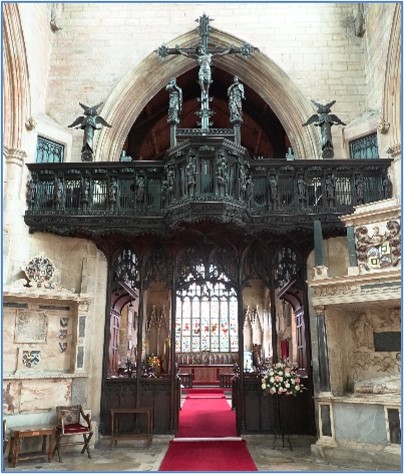
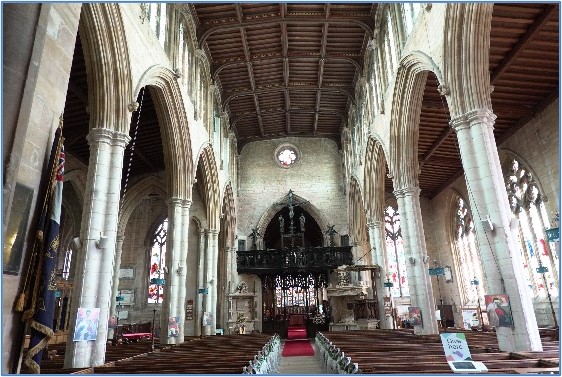
During 1780 they moved to nearby Sleaford, attending the Anglican church St Denys. |
 |
 |
 |
Newton explained to his friend Nathaniel Hillier (1740-1810) in 1800 what happened next:
‘Mr Gardiner her husband had landed estates of about £500 per ann. He is a man of agreeable inoffensive behaviour, but ruined himself, not by vicious habits, but by an easy inconsiderate temper, which led him to serve others, to his own prejudice, till, by degrees, he lost all.
Previous to this, I had introduced her to the acquaintance of my dear friend Mr Serle Commissioner of the Transport, who gave Mr Gardiner when destitute a small place at Norman Cross, where a great number of French prisoners are kept. His salary is since enlarged to about £120 per ann. But for Mr Serle’s friendship, I think they must have wanted daily bread. They have 3 sons and 2 daughters. The eldest son apprentice to an apothecary at Stamford and I believe likely to do well. The 2 others, contrary to the expectations to which they were brought up when young, are gone to Jamaica. Their eldest daughter proved quite disobedient, married a worthless man, in defiance of her parents’ wishes, and is now forsaken by her husband, and is only kept from begging or starving, by the little her parents can spare for her support. The other daughter Sarah, is an amiable gracious young woman, and has been married more than three years to my nephew Benjamin Nind.’ |
 |
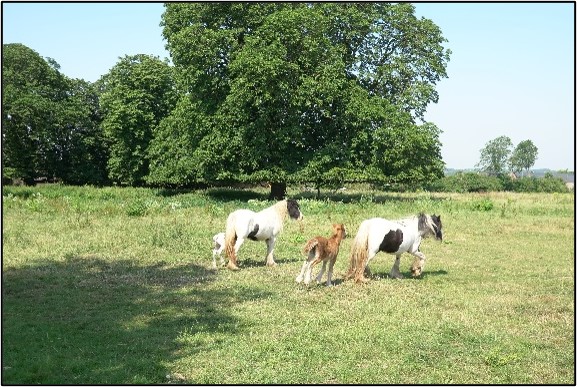 |
|
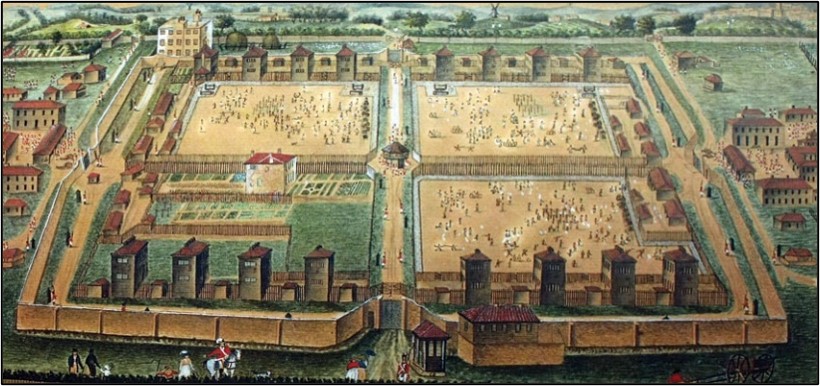
Norman Cross – then and now |
Norman Cross Prison, a few miles south of Peterborough on the Great North Road (now the A1), was built in 1797 to house French prisoners of war.
The 1813 Report of the Survey of the Depot for Prisoners of War states:
‘Wm. Gardiner, entered first clerk 1st September 1803 at £118 per annum, abate taxes Is. in the pound, £9 fo., Civil List at 6d., leaving £8 19s. 8fd. net per month.’ |
|
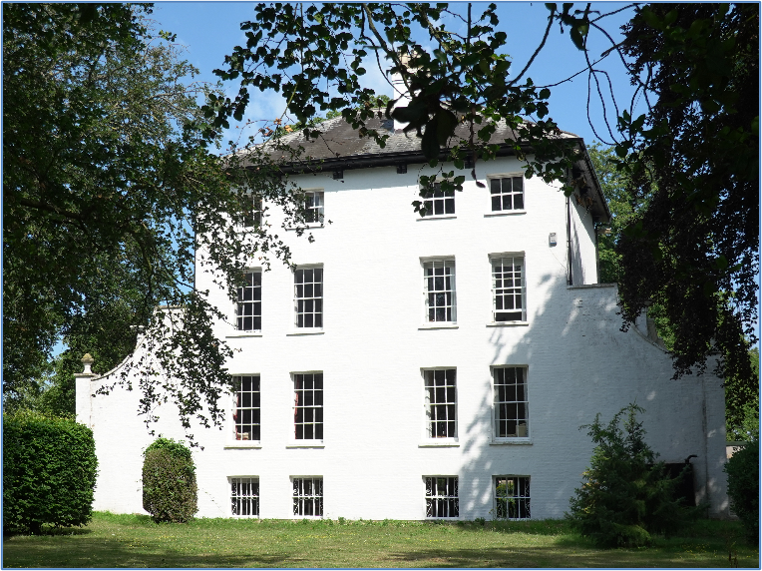
The Agent’s House
|
 |
|
The Gardiners lived in the Agent’s house, having the ground floor, one garret and the front kitchen. |
Endnotes:
|
[1] |
Newton's published writings by July 1776 his Authentic Narrative (1764), Twenty-Six Letters on Religious Subjects (1774) and several letters, hymns and poems in the Gospel Magazine. |
|
[2] |
Hebrews 7:25 Wherefore he is able also to save them to the uttermost that come unto God by him, seeing he ever liveth to make intercession for them. |
Acknowledgements:
Lambeth Palace Library MS 3792
The Morgan Library & Museum MA 733
Museum of the Bible
Private collections
Westminster College
|
 Print
Print